SARS-CoV-2 AND MICROVASCULAR DESTRUCTION: IS THE SPIKE PROTEIN SIMPLY CAUSING THE “REMOVAL” (DESTRUCTION) OF THE MICROVASCULATURE? THE RELATION TO SYNDROME X
December 4, 2021
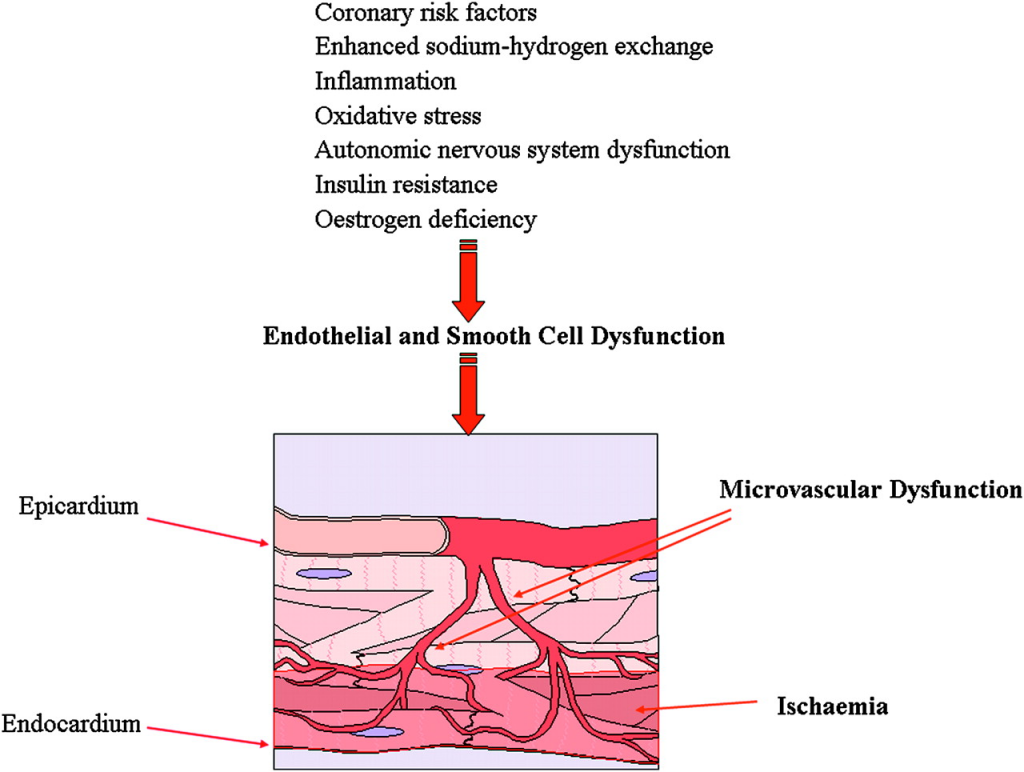
SYNDROME X was a disease that resembled coronary artery disease but the patients had clear coronary arteries. It was dismissed as PSYCHOLOGICAL! It was discovered that the symptoms were of MICROVASCULAR CORONARY ARTERY DISEASE and a VERY REAL disease. Just like Long COVID. And, I believe, caused by the same pathologies – except they are for EVERY organ and system in the body in the case of Long COVID. Please watch the referenced video. THE VESSELS ARE TOO SMALL TO REGISTER ON CONVENTIONAL TESTS.
A very interesting paper published in Nature Neuroscience 21 October 21 describes structural changes in cerebral small vessels of patients with COVID-19 and elucidate potential mechanisms underlying the vascular pathology. In brains of severe acute respiratory syndrome coronavirus 2 (SARS-CoV-2)-infected individuals and animal models, they found an increased number of empty basement membrane tubes, so-called string vessels representing REMNANTS OF LOST CAPILLARIES.
The authors of the paper attributed this loss to the main protease of SARS-CoV-2 “MPRO” and its ability to cleave NEMO.
The authors noted that the ablation of NEMO in brain endothelial cells induced microvascular pathology in mice that was REMINISCENT (emphasis mine) of what we observed in brains of patients with COVID-19.
I offer another explanation REMINISCENT of the virus’ involvement with other organs.
There is a protein. A fascinating protein called FOG2. Friend of GATA (not Kamsky) 2. If you remove this protein in the developing fetus, it simply dies. It does not develop a functional heart, among other things. If you block this protein in adults, it causes the cardiac microvasculature to erode – “disappear.”
I hypothesize this protein may be involved.
Let us look at a test used for, among other things, diagnosis Systemic Sclerosis. The nailfold videocapillaroscopy test. In COVID patients there was one very interesting finding. COVID-19 doesn’t seem to significantly induce, in short-term, specific alterations in peripheral microvascular array as evaluated by NVC, despite the severity of the disease, except for a SIGNIFICANT REDUCTION OF THE ABSOLUTE NUMBER OF NAILFOLD CAPILLARIES.
NOTE! The brain scans of COVID patients revealed REMNANTS OF LOST CAPILLARIES.
The same is true for the heart. A paper presented a state-of-the-art review of CMD pathophysiology in COVID-19 from five aspects. As SARS-CoV-2-like virus particles were detected in a coronary endothelial cells, and massive coronary small vascular microthrombi were found in deceased COVID-19 patients.
A similar finding was observed in the lungs. Microvascular endothelium is a main site of PAI-1 production, and the marked incorporation of PAI-1 in abnormal or persistent clots supports a plausible mechanism that may explain poor clot resolution in COVID-19.
The spike protein has many ways to destroy the microvasculature.
In conclusion, the findings of a paper published 22 Nov 21 in Clinical Science suggest that the S protein may prompt PC dysfunction, potentially contributing to microvascular injury. This mechanism may have clinical and therapeutic implications.
Referenced/Related Papers
The SARS-CoV-2 Spike protein disrupts human cardiac pericytes function through CD147-receptor-mediated signalling: a potential non-infective mechanism of COVID-19 microvascular disease
https://pubmed.ncbi.nlm.nih.gov/34807265/
Lung epithelial and endothelial damage, loss of tissue repair, inhibition of fibrinolysis, and cellular senescence in fatal COVID-19
https://www.science.org/doi/10.1126/scitranslmed.abj7790
Coronary microvascular dysfunction pathophysiology in COVID-19
https://onlinelibrary.wiley.com/doi/10.1111/micc.12718
Assessing microvascular changes in systemic sclerosis diagnosis and management
https://pubmed.ncbi.nlm.nih.gov/20703220/
AB0679 NAILFOLD VIDEOCAPILLAROSCOPY RESULTS IN COVID-19 PATIENTS RECOVERED FROM DIFFERENT DISEASE SEVERITY
https://ard.bmj.com/content/80/Suppl_1/1372.2
Dr Robin Roberts explains Syndrome X and how it can be treated
https://www.youtube.com/watch?v=es2OSeBrJ7s&ab_channel=RenewECPTherapy